📊 Portfolio Management
Welcome back to the 📊 Portfolio Management series—our 9-part guide to building and managing a well-structured investment portfolio.
So far, we’ve explored diversification, goal-based investing, risk-reward balance, and liquidity. Now, we turn our attention to another important factor that can have a meaningful impact on long-term wealth creation: investment costs.
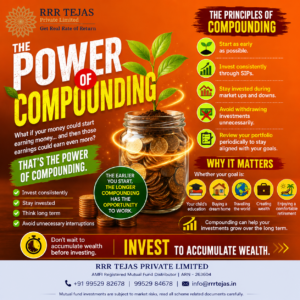
Small costs may appear insignificant today, but over long investment horizons, they can compound just like returns.
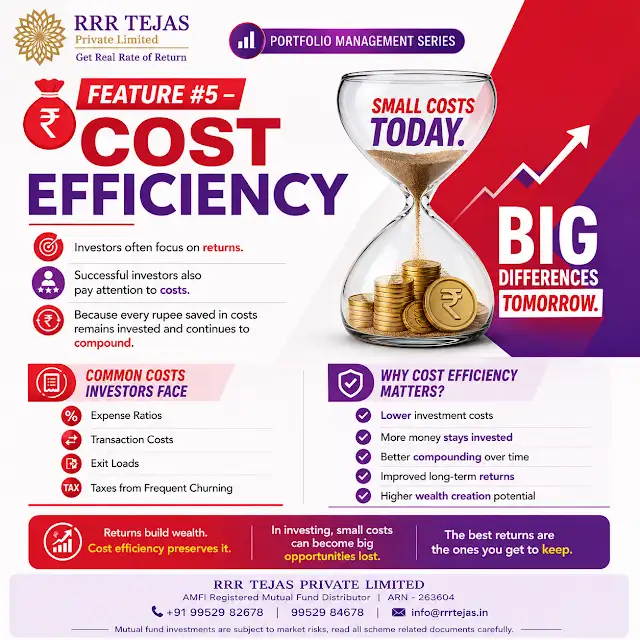
💰 Feature #5 – Cost Efficiency
Investors often focus on returns.
Successful investors also pay attention to costs.
Why?
Because every rupee saved in costs remains invested and continues to compound.
Common Costs Investors Face
✅ Expense Ratios
✅ Transaction Costs
✅ Exit Loads
✅ Taxes from Frequent Churning
Example
Imagine two investors.
Investor A earns 12% but incurs higher costs.
Investor B earns a similar return with lower costs.
Over 15–20 years, even a small difference in costs can lead to a substantial difference in final wealth.
Benefits of Cost-Efficient Investing
✔ Enhances long-term returns
✔ Improves compounding
✔ Reduces portfolio drag
✔ Encourages disciplined investing
✔ Maximizes wealth creation potential
Key Takeaway
You cannot control market returns.
But you can control investment costs.
💰 Lower costs today can mean higher wealth tomorrow.
🎯 Take Action Today
Investment costs may look small in isolation, but their long-term impact deserves attention. Understanding what you pay—and whether those costs are justified—is an important part of effective portfolio management.
Book a Portfolio Review with RRR Tejas and let us help you review your portfolio costs, identify unnecessary expenses, and ensure your investments remain efficient and aligned with your long-term goals.
Disclosure:
RRR Tejas Private Limited | ARN 263604
To know more about Financial Wellbeing: RRR Tejas Financial Wellbeing Video